Why I still believe in Coaching, and Why You Should Too
It Might Be the Best Career Path on the Planet
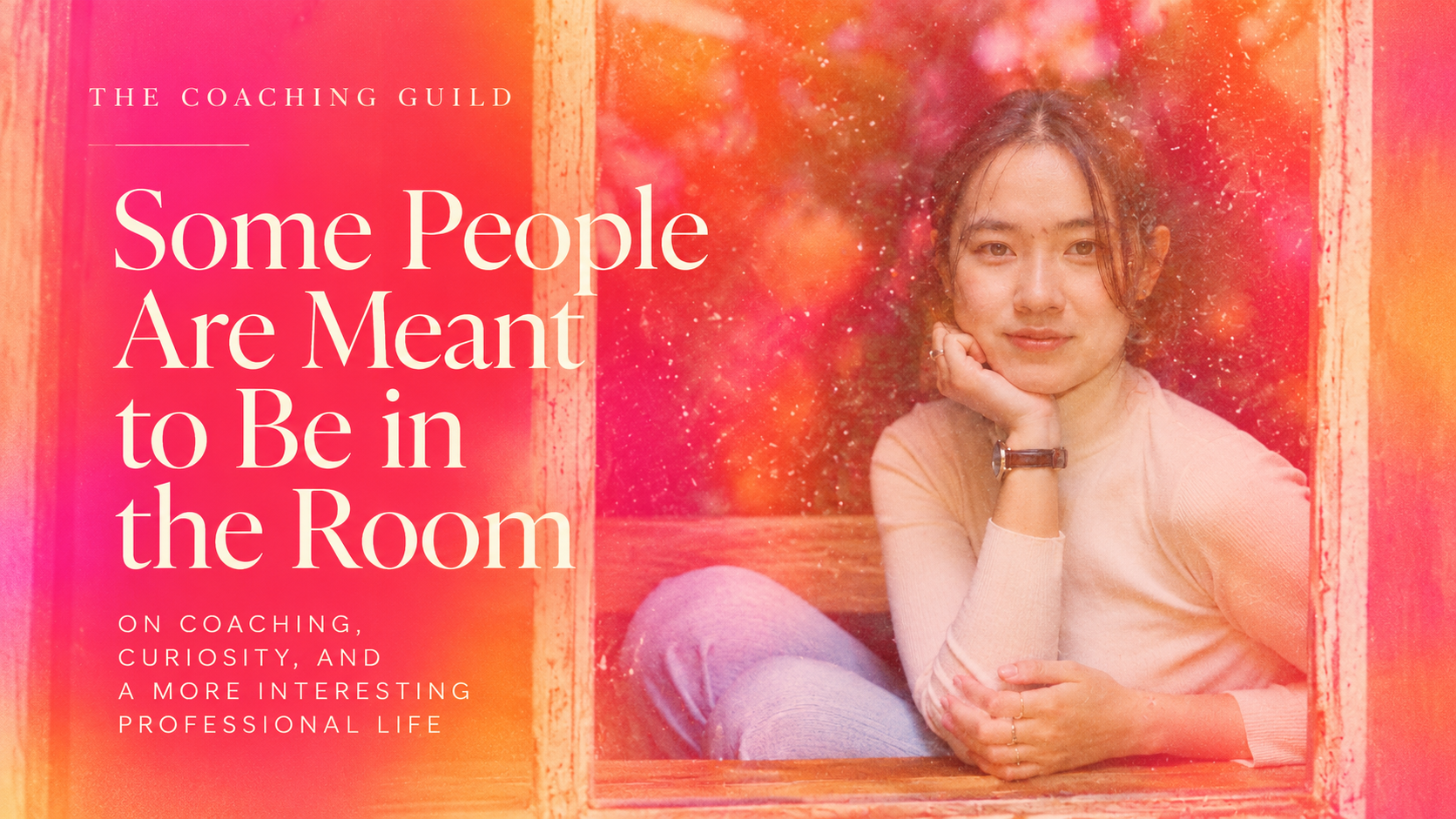
I've been coaching and training coaches long enough to have developed some fairly strong opinions about this profession.
For starters, I think much of the coaching industry has made coaching considerably less interesting than it ought to be.
Somewhere along the way, we became obsessed with productivity, accountability, performance, and helping people accomplish increasingly elaborate lists of things they think they should want.
We built an entire industry around the assumption that human beings are projects in need of better management.
Frankly, I think we can do better. Because people are fascinating. They are contradictory, brilliant, frightened, courageous, irrational, imaginative, and capable of changing their lives in ways that would have been almost impossible to predict six months earlier.
They fall in love with people they shouldn't. They stay in careers they've outgrown. They build elaborate identities around decisions they made when they were twenty-three.
They confuse obligation with devotion, familiarity with safety, and being needed with being loved. They want things they are afraid to admit. They tell themselves stories about who they are, what they're capable of, and what the world will allow them to have.
And sometimes, in the company of someone who knows how to listen, those stories begin to change.
That is the work I fell in love with.
Not fixing people. Not dispensing advice from some imaginary position of superior wisdom. Not handing someone a prettier planner and calling it transformation.
I fell in love with the extraordinary intimacy of sitting across from another human being and helping them investigate their own life.
I fell in love with the psychology of it. The complexity of it. The moments when someone says something aloud for the first time and you can almost see their understanding of themselves rearranging.
I fell in love with the intellectual challenge of knowing when to ask another question, when to offer an observation, when to challenge a familiar story, and when to recognize that what you're hearing requires a different kind of professional support. Because good coaching isn't simply having excellent intuition or being the person everyone comes to for advice.
Good coaching is a discipline.
It requires psychological literacy, ethical judgment, sophisticated listening, and an unusual willingness to remain curious when you think you already understand what's happening.
It asks you to examine your own assumptions, your relationship with authority, your biases, your emotional reactions, and your need to be helpful.
Sometimes it requires you to sit quietly while another person discovers something you could have told them twenty minutes earlier. That restraint is harder than it sounds.
I think becoming a truly good coach changes the way you experience being human.
You start noticing how people construct meaning. You recognize the difference between what someone says they want and what they have organized their life around. You become more attentive to language, identity, emotion, nervous-system responses, family systems, and the enormous influence of the stories people have inherited.
You learn that insight and change are not the same thing. You learn that compassion does not require agreement. You learn how to be both deeply invested in someone's humanity and appropriately detached from their decisions.
Eventually, if you take the work seriously, you become a very different kind of listener. One who can hold complexity without rushing to resolve it. One who understands that people deserve more than cheerful encouragement and a collection of motivational slogans. One who can help create the conditions in which genuine change becomes possible.
This is why I built The Coaching Guild.
I wanted a school for people who take the human condition seriously. People who are curious about psychology, relationships, identity, behavior, culture, and the extraordinary complexity of being alive. People who want to develop real competence rather than simply acquire a certificate that gives them permission to call themselves a coach.
At The Coaching Guild, we study the psychological foundations of coaching. We practice. We listen to real coaching conversations and learn to recognize the difference between an interesting question and an effective intervention. We examine ethics, boundaries, mental health, and the limits of our professional role. We learn how to work with people without assuming we know what their lives should look like.
We expect our students to demonstrate what they've learned. Certification requires documented client coaching experience, instructor-reviewed sessions, and a final panel interview.
I want students who graduate knowing they have earned their place in this profession. Not because they're perfect. Because they've done the work.
Our next group begins in February 2027. And I want to speak directly to the person who has been thinking about becoming a coach but hasn't quite decided to take herself seriously.
Maybe you've been the person people come to for years. Maybe you're fascinated by human behavior and find yourself reading psychology books for pleasure. Maybe you've experienced the power of a genuinely transformative conversation and wondered whether you could learn to facilitate that kind of experience for someone else.
Maybe you're ready to build a professional practice that makes use of your intelligence, your curiosity, your life experience, and your capacity to connect with people - maybe you simply have the persistent feeling that there is a more interesting professional life waiting for you.
I can't tell you whether coaching is the right profession for you. And I would be suspicious of any school that promised it was. What I can tell you is that coaching, practiced with skill and integrity, is an extraordinary way to spend a working life.
You get to keep learning. You get to have conversations that are rarely superficial. You get to be present for people as they make decisions, confront old patterns, discover unfamiliar possibilities, and begin living differently. You also develop a body of professional expertise that belongs to you.
I would love to teach you how to do this work.
The February group is an opportunity to make a serious commitment to becoming the kind of coach people can trust with the complicated, intimate, consequential material of their lives.
We also equity-based tuition and individualized payment arrangements because I don't believe financial privilege should be the deciding factor in who gets access to excellent professional education.
If you've been waiting for an invitation to take this possibility seriously, consider this one. Reply to this and let's schedule a time to talk.
You don't need to have everything figured out.
We can talk about the training, the expectations, the tuition, and whether this is genuinely the right fit for you. I'd much rather have an honest conversation about your future than convince you to purchase something you don't need.
That said, if this work has been calling to you for a while, I'd encourage you to stop treating that curiosity as an idle thought. There are professions that teach you a collection of skills. And there are professions that change the way you see the world. I believe coaching, at its best, can do both.
February is a beautiful place to begin.