Coaching is Not Neutral
But it sure benefits from you thinking it is.
Coaching Is Not Neutral
Coaching often presents itself as neutral. Universal. Available to anyone who is willing to do the work.
But neutrality is a myth, especially in fields shaped inside unequal systems.
Modern coaching models were largely developed within white, Western, individualistic frameworks that assume certain conditions as baseline: relative safety, access to resources, emotional regulation under pressure, and the freedom to prioritize personal growth. These assumptions are rarely named, yet they quietly shape what is considered healthy, skilled, or “ready.”
When coaching treats those norms as universal, it does not simply miss people who live outside them. It reinforces existing power dynamics by rewarding those who already fit the mold and pathologizing those who do not.
One of the clearest places this shows up is in how emotional regulation is treated.
In many coaching spaces, regulation is framed not as a skill that develops in context, but as a prerequisite for being taken seriously. Anger, grief, overwhelm, or nonlinear expression are often treated as problems to solve before meaningful work can begin. The message, however subtle, is that certain emotional states disqualify a person from being heard.
This is not emotionally intelligent. It is morally coded.
Emotional expression does not signal incapacity. It signals information. In many cases, it signals threat, injustice, or accumulated harm. When coaching prioritizes comfort, smoothness, or palatability over truth, it asks people to manage themselves in order to be acceptable rather than supported.
A simple but significant shift coaches can make is this: stop treating emotional regulation as a moral requirement.
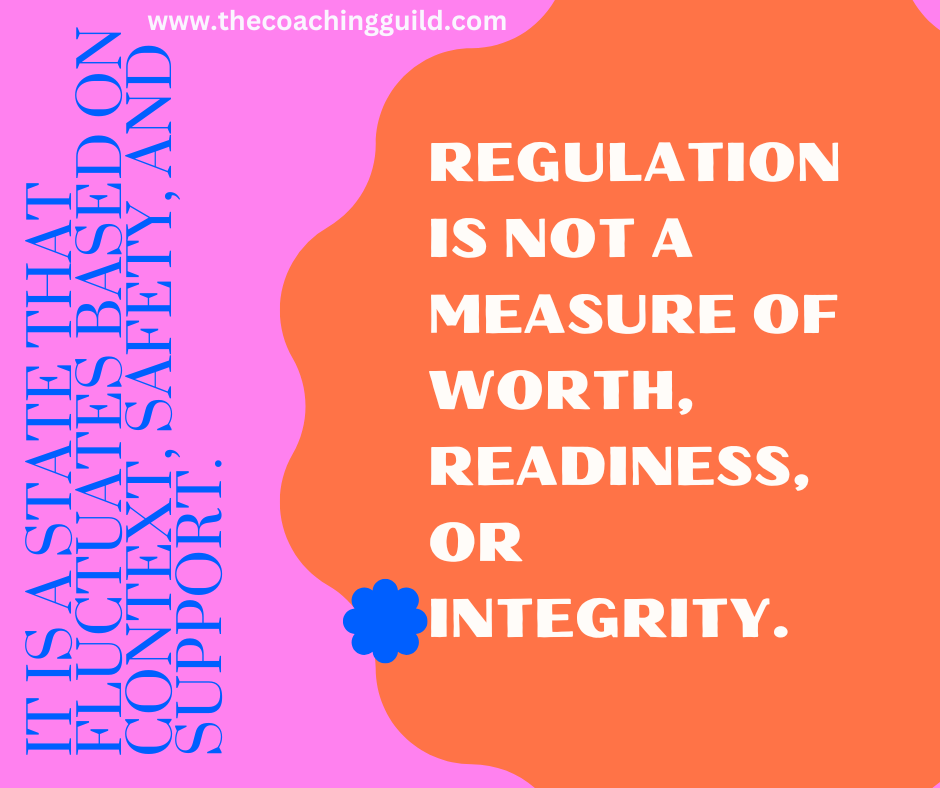
Regulation is not a measure of worth, readiness, or integrity. It is a state that fluctuates based on context, safety, and support. When coaches allow emotion to be present without rushing to correct it, power redistributes. The room becomes more honest. The work becomes more ethical.
This is not about abandoning skill or structure. It is about recognizing that coaching is not happening in a vacuum. Power, race, class, trauma, and access are already in the room whether they are named or not. Ignoring them does not create neutrality. It creates silence.
I am spending time this week naming how coaching intersects with white supremacy culture and what it would take to practice this work with greater integrity. Not to indict individuals, but to tell the truth about systems and the responsibilities that come with working inside them.
If you are a coach, practitioner, or educator who wants to think more carefully about how power, identity, and emotional capacity shape this work, you are welcome to stay with the conversation.
The Coaching Guild is a training coach training program specifically designed to nurture dreamers, artists, creatives, outsiders, rebels, and good troublemakers. It is a multi-instructor, multi-disciplinary approach to training that prioritizes learning innovative foundational coaching skills and marketing training.
If you are interested in coach training done very differently, hit me up for a no-pressure, no BS, no trip, and fall into a sales funnel conversation. Let’s talk about what's possible for you as a coach.
#coaching #lifecoaching #coachtraining #lifecoachtraining #coachingandethics #thecoachingguild